
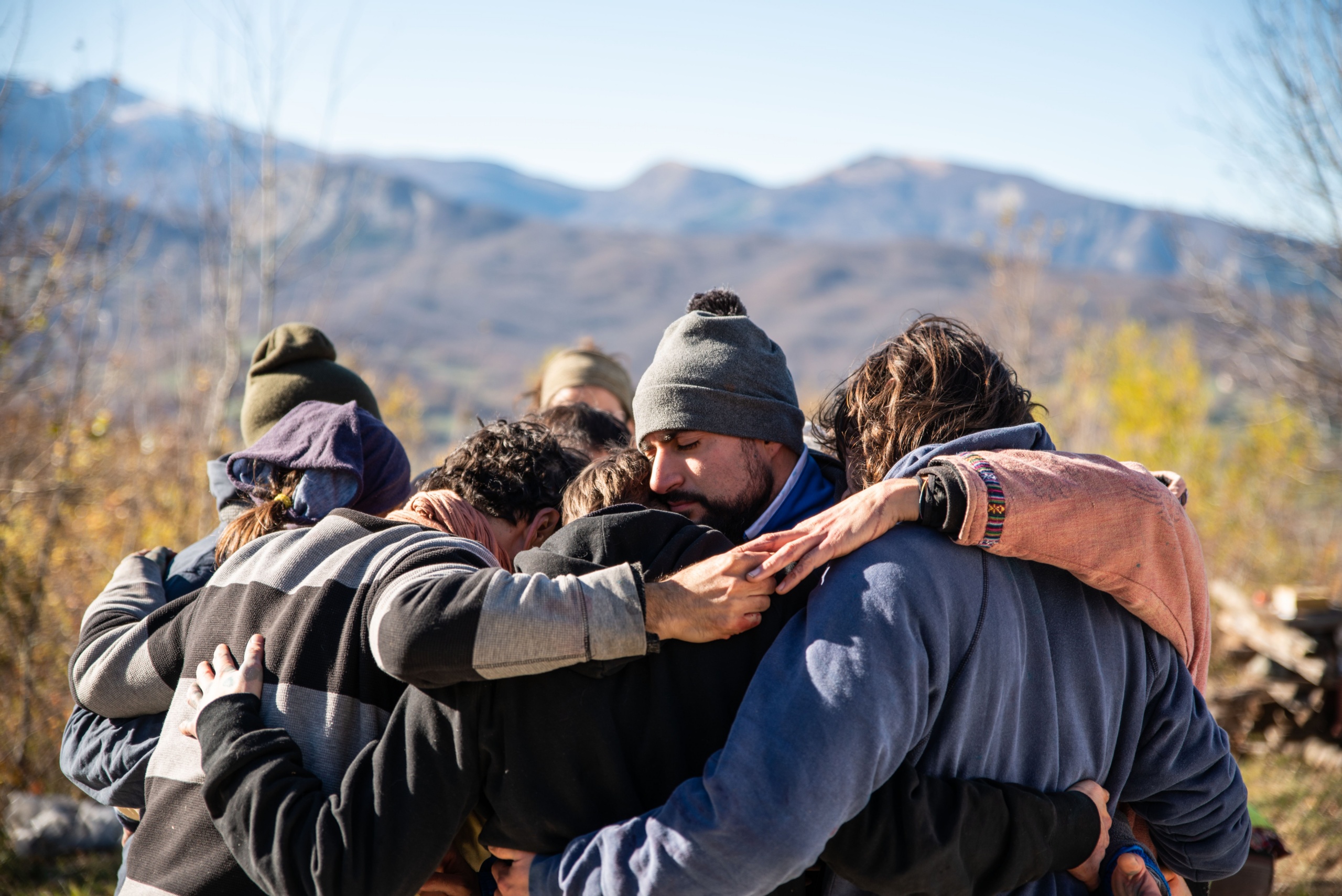
Some grief changes life completely. Many survivors of loss share a common experience: the feeling that life has been divided into before and after.
This suicide story from a Survivor Of Suicide (SOS) support group member at the Texas Crisis Center is shared in their own words. It speaks to the depth of losing a loved one to suicide, the courage it takes to walk into a support group, and the unexpected community that forms when people are given a safe place to tell the truth.
When Life as You Knew It Disappears
“When the EMTs rolled out my 22-year-old son’s body, I heard myself say out loud:
‘My son is dead.’
‘God is dead.’
‘And I am dead.’
My life as I knew it disappeared when my Samuel took his own life.
He had just graduated from Austin College, had a job with benefits in his industry, and a beautiful girlfriend of two years. They were talking about marriage. When I met her, I knew instantly she was the one. In the end, none of us would spend our lives with Sammy, the sweetest, most affectionate, caring, intelligent, and loving person I’ve had the privilege of knowing. I was at my best with him.
About a year after Samuel died, my wife encouraged me to attend the Survivors of Suicide program at the Suicide and Crisis Center of North Texas.
I halfway enrolled to get her off my back, and I am glad I did. The first meeting was weird, but knowing that our facilitator had also lost a son to suicide motivated me to have patience and come back to at least a second meeting.”
The next meeting turned out to be something he did not expect.
“That second meeting was cathartic. We shared our stories.
I can’t remember who went first, but being an extrovert and emotional person, I laid my heart and soul on the table. Through my weeping and cursing, I shared the most excruciatingly painful details of my son’s death. I was encouraged to be transparent, given that the gathering was a safe place where what was said there stayed there.
My wife and I had already joined a parents group of suicide survivors, but the rules precluded sharing the method our loved ones employed to die or any details of their deaths. I needed a whole lot more than that.”
Finding People Who Understand After Suicide Loss
After a few meetings, something began to change.
“By the fourth or fifth meeting, where we shared pictures of our departed loved ones and shared details of their lives, I felt I was among lifelong friends, dare I say, family.
One couple had lost two children to suicide about three decades apart. I was flabbergasted. They were there with us. If they could do it, maybe my wife and I could get past the greatest travesty of our lives. Would our then 34-year marriage survive?
They gave me hope.”
The support did not end when the SOS program concluded.
“Although the couple sadly moved out of the area, the rest of us started meeting for dinner periodically. My wife, who had worked with another SOS group, was invited to join ours. Even my daughter, who didn’t go through SOS, started attending our get-togethers.
She started meeting one-on-one with a fellow SOS member who has also lost a brother to suicide. If I remember correctly, this young woman was at my house with my daughter recently, well after midnight. Two weeks ago, another SOS friend visited my daughter in the hospital.”
Over time, those relationships became an important part of everyday life.
“Our ‘SOS Group 2025,’ our group chat name, continues to meet and endure the new blows of life. One of our sweetest SOS members died last summer. It was so hard. Most of our group was at the funeral. We invited her mother, who had not only just lost her daughter but also, a year earlier, had lost her son to suicide, to our gatherings. She was there at the most recent dinner I attended.
During Christmas, we all made tamales at my house and had a blast. One of the people who had lost a brother brought her mom. My wife and the other woman, who had lost her son, spent hours visiting with her.
The healing and understanding we received through SOS continues to radiate among us and through us because the healing process is infinite, and the traumas of life are inevitable.
I’m grateful I have friends who really understand.
Unless you’ve lost a loved one to suicide, you cannot fathom the grief.”
Healing Continues Through Connection
Receiving Mental health support after a suicide loss does not mean forgetting. It means finding ways to continue living while carrying both love and loss.
Through SOS, survivors find space to speak the truth, remember, and build relationships with people who understand the complex grief that follows suicide loss. Mental health support after loss matters because healing continues long after the first weeks and months. For many survivors, connection becomes part of how they keep going and move to the next steps.
This suicide story is a reminder that while grief may never fully disappear, healing can continue through community, understanding, and relationships that endure long after the meetings end.
If you have lost a loved one to suicide, you do not have to navigate that journey alone. The Texas Crisis Center offers support, resources, and Survivors of Suicide groups for those seeking connection and understanding after loss.
If you or a loved one needs someone to talk with, call (214) 828-1000 anytime, 24/7.